


For many elderly patients, severe knee or hip arthritis is not just a bone-and-joint problem. It slowly becomes a life-limiting condition. A person who once walked independently begins avoiding stairs. A short visit to the market becomes difficult. Social outings are reduced. Sleep is disturbed by pain. Over time, the patient loses muscle strength, confidence, and independence.
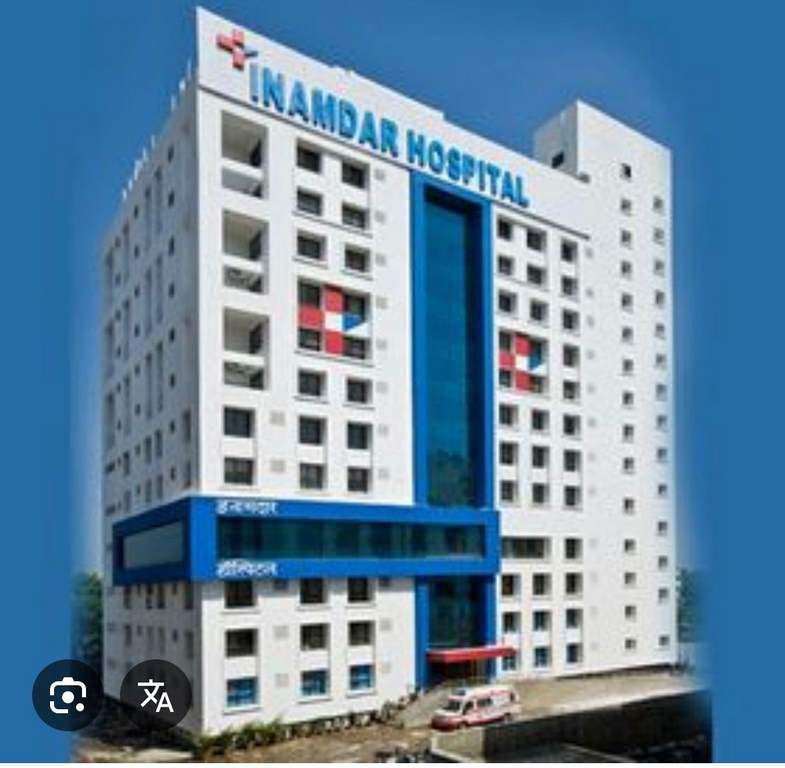
Modern joint replacement is now changing this experience. At Inamdar Multispeciality Hospital, Pune, robotic joint replacement, advanced pain-control methods, and early rehabilitation protocols are helping many patients stand and walk within 24 to 48 hours after surgery.
Dr. Qaedjohar Dhariwal, Joint Replacement Surgeon at Inamdar Multispeciality Hospital, said the aim is not merely to replace a damaged joint, but to restore safe movement with minimum pain and faster confidence.
Robotic surgery does not mean that a robot operates alone. The surgeon remains fully in control. The robotic system acts as a precision-assistance platform. Before and during surgery, it helps map the patient’s joint anatomy, plan the implant position, calculate alignment, and guide accurate bone preparation. This is especially important in knee replacement because even small errors in alignment or soft-tissue balance can affect comfort, walking pattern, and implant life.
In conventional surgery, the surgeon depends heavily on visual judgment, manual instruments, and experience. In robotic-assisted surgery, the surgeon’s experience is supported by computer-guided planning and real-time feedback. This helps in achieving more accurate implant placement, better ligament balance, and a more natural-feeling joint movement.
For geriatric patients, this accuracy matters even more. Elderly patients may have weak bones, long-standing deformity, reduced muscle strength, diabetes, heart disease, or other age-related conditions. A technically precise surgery can reduce unnecessary tissue handling, help control bleeding, and support faster rehabilitation.

The second major change is pain management. Earlier, many patients feared joint replacement because the first few days after surgery were painful. Today, anaesthesia and pain-control science have improved significantly. Motor-sparing nerve blocks, local anaesthetic infiltration around the joint, and multimodal medicines can reduce pain without completely weakening the leg muscles. This allows patients to begin standing and walking under supervision much earlier.
This is why the phrase “painless surgery” must be understood correctly. Major joint replacement is still major surgery. But with robotic precision, careful anaesthesia and structured physiotherapy, the pain can be controlled far better than before. The patient is not simply lying in bed after surgery; the patient is encouraged to move safely.
Early mobilisation is one of the most important parts of recovery. Walking within 24 to 48 hours can reduce stiffness, improve circulation, lower the risk of clots, protect lung function, and rebuild confidence. For elderly patients, avoiding prolonged bed rest is critical because immobility can quickly lead to weakness, confusion, dependency, and fear of movement.
“At Inamdar Hospital, our focus is on making major joint replacement safer, more accurate, and more recoverable for the patient,” said Dr. Dhariwal. “When robotic planning, pain-control protocols, and physiotherapy work together, many senior patients are surprised to see how soon they can stand and walk again.”
For families, this progress is deeply emotional. It may mean seeing a parent walk to the dining table, climb a few steps, attend a family function or return to daily routines without constant fear.
Robotics has not made surgery casual. It has made precision measurable. For senior citizens living with advanced arthritis, that precision can mean reduced pain, faster mobility, and a smoother return to dignity, independence, and normal life.